Blog
Discover expert advice, practical tips, and helpful guides to achieve year-round home comfort. From heating and cooling to water treatment and smart home solutions, our blog helps you make decisions with confidence.
Featured Article
The 2026 Complete Guide to Home Comfort Systems in Modern Homes
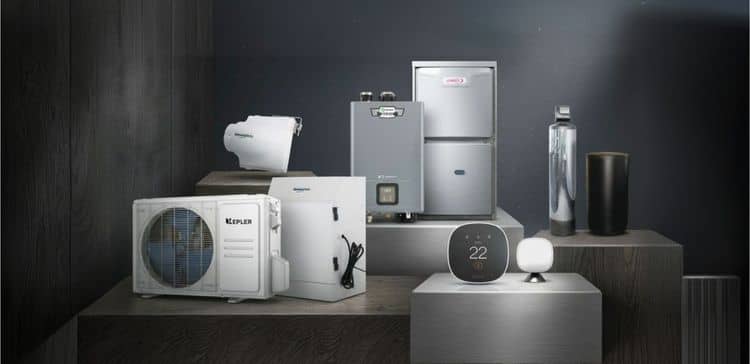
If you’ve ever walked into a house and instantly felt “this just feels right,” that’s home comfort at work. It’s not just about blasting the AC in summer or cranking the furnace in winter. It’s more subtle than that. The air feels fresh, the consistent temperature doesn’t swing too much, and nothing really demands your attention. Most people don’t think about it until something goes wrong. A room feels stuffy. The water takes too long to heat. One side of the house is always warmer than the other. That’s usually when home comfort starts becoming a priority. ## What Is a Home Comfort System? A home comfort system isn’t one single machine. It’s more like a group of systems that all play their part and work in harmony. You’ve got your heating, cooling, airflow, water heating, and even small things like thermostats. On their own, each one does a job. But real home comfort comes from how they work together. A lot of homeowners upgrade one piece and expect everything to improve overnight. Sometimes it helps. But if the rest of the setup is outdated, the results feel… incomplete. ## The Core Components of Home Comfort: HVAC Systems To really understand home comfort, it helps to look at the main pieces involved. Each one affects how your home feels differently. HVAC stands for Heating, Ventilation, and Air Conditioning. These systems do more than just blow air; they regulate your indoor temperature, balance humidity, and maintain the air quality you breathe every day. Think of your HVAC setup as the "heart" of your home. Whether it’s a furnace, heat pump, air conditioner, humidifier, or air purification system, these components work together to maintain your comfort year-round. When your HVAC system is doing its job well, you barely notice it, and that’s exactly how it should be. However, when things start to drift, you’ll pick up on small shifts. Maybe the air feels uncomfortably dry in the winter, or your electricity bills are suddenly climbing. Perhaps the system is running much longer than it used to just to reach the right temperature. These are the first signs that your home comfort might need a professional check-up to get things back in balance. ### 1. Heating Systems: Furnaces and Heat Pumps When winter hits, heating becomes the backbone of home comfort. Traditionally, most homes rely on either [a furnace or a heat pump](https://polaroncomfort.com/heating-cooling), but each has its own strengths: Furnaces are straightforward. They generate heat and push it through the home, providing reliable warmth even on the coldest days. Heat pumps work a bit differently. They move heat instead of creating it, which can make them more efficient and an excellent choice for cooling your home in the summer. For the harsh Canadian climate, the best heating solution is often a combination of both. A Dual Fuel System pairs a furnace with a heat pump to give you the best of both worlds. When temperatures are above freezing, but you still need warmth, the heat pump efficiently keeps you cozy. When the mercury drops into a deep freeze, the furnace automatically steps in to provide the heavy-duty heating power you need. In the summer, the heat pump reverses its role to remove heat from your home, keeping you perfectly cool. There’s no universal “better” option. It depends on your home, your climate, and even how you use your space. But one thing is clear, your heating setup has a direct impact on your daily home comfort and the cost ### 2. Cooling Systems: Air Conditioners and Heat Pumps Cooling sounds simple, but it’s often where home comfort starts to break down. You set a temperature, but the house doesn’t feel consistent. One room is cool, another is warm, and you keep adjusting the thermostat, hoping it balances out. A high-quality air conditioner does more than just lower the temperature—it also manages humidity and optimizes airflow. If you already have a reliable heating source and are only looking for a summer [cooling solution](https://polaroncomfort.com/heating-cooling), a standalone air conditioner is often the most straightforward choice. However, for many Canadian homes, a heat pump is an even smarter alternative. Because a single unit handles both heating and cooling, it is incredibly efficient and helps you save on energy bills year-round. When paired with a smart thermostat, the system automatically adjusts itself to maintain your preferred settings. This means you can stop "fighting" with your thermostat and simply enjoy a perfectly tempered home through every season. ### 3. Smart Thermostats [Thermostats](https://polaroncomfort.com/smart-home) don’t get much attention, but they have a quiet influence on home comfort. A smart thermostat can learn your routine, adjust temperatures automatically, and help avoid unnecessary energy use. It’s not a dramatic upgrade, but it’s one you notice over time. Instead of constantly tweaking settings, your home temperature starts to feel more stable. ### 4. Indoor Air Quality: Air Purifiers and Air Humidifier Air quality is easy to overlook. You can’t always see it, and most of the time you get used to it, , but your Indoor Air Quality (IAQ) is a component of your HVAC system that you simply cannot ignore. If the air feels heavy or dusty, it affects how you feel in the space. Allergies, odors, or even just a lack of freshness can make a home feel uncomfortable, even when the thermostat says the temperature is fine. - **Air purifier:** Upgrading to a high-efficiency [air purifier](https://polaroncomfort.com/air-purification) works to capture airborne particles as they circulate through your home. By removing pollutants and allergens from the air you breathe, and ensuring proper ventilation, you can significantly improve your daily well-being. - **Air Humidifier:** In the heart of a Canadian winter, an [air humidifier](https://polaroncomfort.com/air-purification) is a must-have. When your heating system runs 24/7, it strips the moisture from the air. This dry environment can lead to itchy skin, dry throats, and even nosebleeds. A simple humidifier attached to your furnace or heat pump solves this problem instantly, adding the perfect amount of moisture back into your home for a truly comfortable winter. ## Water Heating: Tank vs. Tankless Systems Who doesn’t love a hot shower to start the morning? We often take hot water for granted until it suddenly runs out. Traditionally, many Canadian homes rely on a storage [tank water heater](https://polaroncomfort.com/water-heating). These systems keep a large volume of water heated and ready for use at all times, providing peace of mind and a steady supply for the whole family. However, [tankless water heaters](https://polaroncomfort.com/water-heating) are becoming the modern standard for energy-conscious homeowners. This "on-demand" technology changes the way you use hot water by heating it only as it flows through the unit. This means: - **Endless Hot Water:** You’ll never run out, even if you’re the last one in the shower. - **Energy Savings:** Since the unit doesn't heat water 24/7, you stop paying to heat water you aren't using. - **Low Maintenance:** Modern tankless systems are designed for long-term reliability with minimal upkeep. Whether you choose a high-efficiency tank or a space-saving tankless system, the goal remains the same: reliable. ## Signs Your Home Comfort Needs an Upgrade Not every issue is obvious right away. But over time, patterns start to show. If you’ve noticed your home isn't as cozy as it used to be, it might be sending you a message. Here are a few common signs that your home comfort might need attention: - **Inconsistent Temperatures:** Some rooms feel like a sauna, while others are freezing. - **Spiking Utility Bills:** Energy costs are higher than expected despite normal usage. - **Frequent Repairs:** Systems need constant servicing just to keep running. - **Poor Air Quality:** Air feels stale, dusty, or dry. - **Water Woes:** Hot water doesn’t last as long. If a few of these sound familiar, it might be time to take a closer look at your setup. ## Building a Complete Home Comfort Solution Improving [home comfort](https://polaroncomfort.com/) doesn’t always mean starting from scratch. In most cases, it’s about understanding what’s working, identifying the gaps, and making smart, gradual improvements. A truly complete home comfort solution focuses on four main pillars: - **Reliable heating and cooling:** Systems that provide even, consistent temperatures year-round. - **Breathable Air:** Advanced filtration and ventilation for a healthier environment. - **Efficient Water Heating:** On-demand or high-efficiency tanks that never leave you in the cold. - **Smart Controls:** Simple, intuitive thermostats that put you in charge of your climate. When these pieces start working together, the overall experience changes. Your home feels more consistent, and managing it becomes easier. ## Final Thoughts on Home Comfort There isn't a "one-size-fits-all" fix for home comfort; it is all about finding the right balance for your specific space. Some homes need a boost in heating power, while others require cleaner air or better energy efficiency. If you’re ready to see how your home can perform better, let a professional team guide the way. [Contact Polaron Comfort today](https://polaroncomfort.com/contact) for an expert investigation into how we can help you achieve the perfect home environment.
 Nov 11, 2026
How to Size a Heat Pump for an Ontario Home
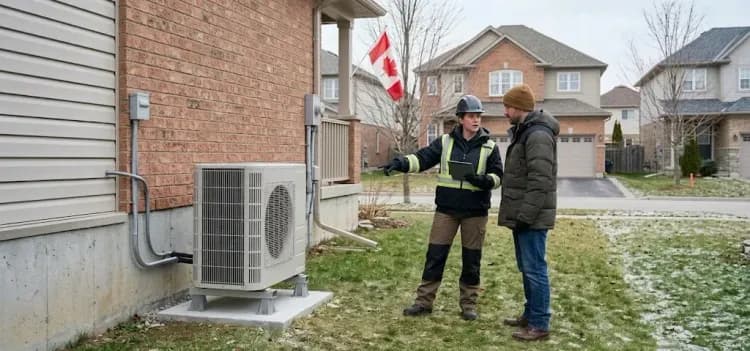
Size a heat pump for an Ontario home using BTUs, tons, square footage, climate, and backup heating.
 Oct 27, 2026
Renting a Tankless Water Heater in Ontario
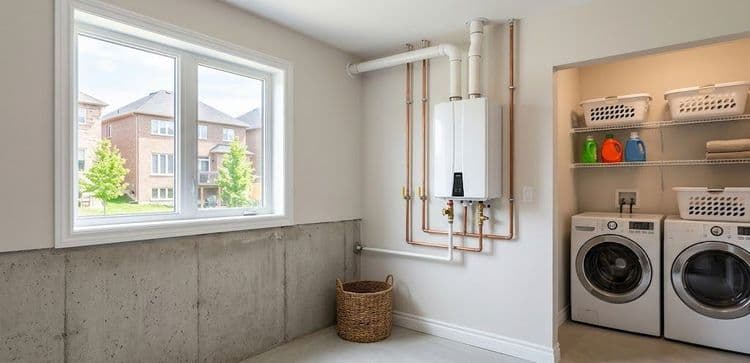
Upgrading to a high-efficiency tankless water heater is one of the most effective ways to lower your monthly utility bills and ensure your family never runs out of hot water. As energy costs fluctuate across Ontario, homeowners are increasingly switching from traditional storage tanks to on-demand systems. When making the transition, the biggest decision is whether to purchase the equipment outright or opt for a tankless water heater rental. By comparing upfront costs, maintenance responsibilities, and long-term value, you can make an informed choice that protects both your home comfort and your budget. Why Upgrade to a High-Efficiency Tankless Water Heater? Traditional hot water tanks continuously heat and hold 40 to 60 gallons of water, wasting energy through standby heat loss while you are at work or asleep. A high-efficiency tankless water heater solves this problem by heating water instantly only when a tap is turned on. Hot Water on Demand: Delivers a limitless supply of hot water, perfect for large families, back-to-back showers, or high-usage morning routines. Massive Energy Savings: Slashes monthly natural gas or electricity consumption by up to 40% by eliminating standby energy waste. Space-Saving Design: Compact, wall-mounted units reclaim valuable basement square footage previously occupied by a bulky storage tank. Longer Lifespan: With proper care, tankless units easily outlast standard storage tanks, operating reliably for up to 20 years. When deciding between renting or buying a tankless water heater in Ontario, owning offers lower total lifetime costs but requires a steep upfront capital investment. Conversely, renting eliminates upfront costs and offloads all maintenance, repair, and emergency service risks onto the provider in exchange for a predictable monthly fee. Rent vs. Buy Tankless Water Heater: Comparison | Feature / Criteria | Owning a Tankless Water Heater | Renting a Tankless Water Heater | | :---- | :---- | :---- | | Upfront Investment | High initial cost | \$0 upfront capital required | | Long-Term Cost | Cheaper over the full lifespan of the unit | Higher cumulative cost over a decade | | Maintenance & Servicing | No Maintenance & Warranty Included | No Maintenance & Warranty Included | | Financial Risk | / | Predictable monthly pricing with total peace of mind | | Ideal For | Homeowners with available capital seeking maximum long-term savings | Homeowners wanting fixed monthly costs and hassle-free protection | The Polaron Comfort Advantage: The Best Tankless Water Heater Rental in Ontario If you are looking for the most competitive tankless water heater rental cost in Ontario, Polaron Comfort has disrupted the 2026 market with an unbeatable program. We make upgrading to a high-efficiency system affordable, stress-free, and highly rewarding for local homeowners. Industry-Leading Pricing: Rent a premium tankless water heater for just \$34.99/month (plus tax)—significantly lower than the standard \$50 to \$65 monthly rates charged by major competitors. Don't Pay for 6 Months: Keep your money in your pocket with zero payments for the first half-year of your rental agreement. 100% Maintenance-Free: Our modern systems are designed for high performance with zero maintenance hassle for the homeowner. 15-Year Comprehensive Warranty: Every rental package includes a robust 15-year parts and labor warranty, completely shielding you from unexpected repair bills. By choosing Polaron Comfort, you secure a predictable, low monthly rate while offloading all repair and maintenance risks to a licensed professional. Contact our team today to request your free quote. Related Articles The 2026 Complete Guide to Home Comfort Systems in Modern Homes Heat Pump vs Furnace 2026: Finding the Right Heating Solution for Your Home Water Treatment Solution Guide 2026: Reverse Osmosis & Water Softener Frequently Asked Questions 1\. What is the difference between a tankless and a standard tank water heater? Standard storage tank water heaters continuously heat and store water in a large tank, leading to standby energy loss. Tankless water heaters flash-heat water only when a tap is turned on as it travels through your pipes, providing an endless supply of hot water on demand while reducing energy waste. 2\. How long do tankless water heaters last? While traditional tank water heaters typically last 10 to 15 years, high-efficiency tankless water heaters are engineered for greater longevity and can last for up to 20 years. 3\. When should I replace my current water heater? You should consider upgrading your unit if it is nearing the end of its lifespan, if you notice rusty or cloudy water, if the unit makes strange "knocking" noises, or if you are facing frequent and expensive repair bills. 4\. How long does a tankless water heater installation take? A typical water heater replacement takes between 3 and 8 hours. Because a tankless system requires specific wall-mounting and precise venting, it generally takes slightly longer to install than swapping out a standard tank model. 5\. Can I repair my water heater myself? We strongly advise against attempting DIY repairs on your water heater, especially on natural gas or propane-fueled units, as this can lead to severe injury, carbon monoxide exposure, or fire hazards. Always rely on a licensed HVAC technician for safe and reliable service.
 Sep 22, 2026
2026 - 2027 Winter Forecast: Why El Niño Makes a Heat Pump the Smartest Investment for Canadian Homes
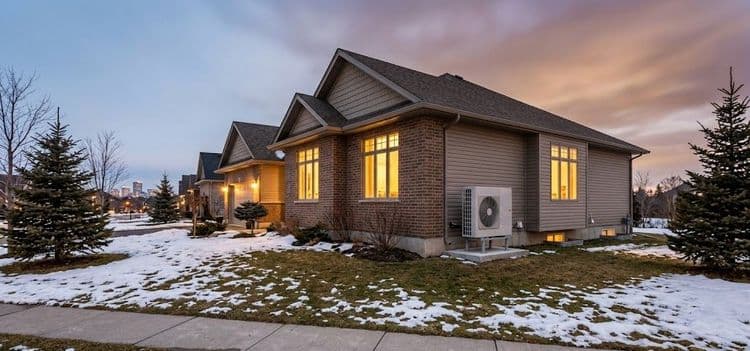
Canadian winter weather has always been famously harsh, but recent meteorological trends are rewriting the seasonal playbook. According to recent weather outlooks, winter is expected to wait on the sidelines as an active El Niño pattern extends fall-like temperatures deeper into the season. While a delayed winter might sound like a welcome relief from heavy snow shoveling, these shifting weather patterns present a unique challenge for home comfort. Instead of continuous sub-zero deep freezes, the 2026 \- 2027 Winter Forecast in Canada points toward volatile temperature swings, mild shoulder-season spikes, damp air, and sudden, short-lived Arctic cold snaps. Relying solely on a traditional gas furnace during a mild, fluctuating winter is inefficient and costly. Here is why upgrading to a cold-climate heat pump, or pairing it with your furnace in a hybrid system is the ultimate way to maintain year-round indoor comfort while keeping utility bills under control. What the 2026 \- 2027 Winter Outlook Means for Your Heating Bills During standard Canadian winters, natural gas furnaces do the heavy lifting by running continuously to combat deep freeze conditions. However, the 2026 El Niño winter pattern creates prolonged periods where outdoor temperatures hover between 0°C and 12°C. When outdoor temperatures remain mild: Gas Furnaces Overwork & Overheat: Traditional furnaces are designed to generate high-intensity heat. Running a furnace during mild 8°C winter days leads to short-cycling (turning on and off rapidly), which wears out mechanical components and wastes natural gas. Indoor Air Moisture Problems: Mild winter days mixed with rain or melting snow create heavy indoor humidity. Standard single-stage heating systems struggle to balance indoor air quality under these conditions. Because your furnace won't need to burn full capacity fossil fuels during a milder seasonal start, this is precisely when a modern heat pump delivers its highest return on investment. Why a Heat Pump is Perfect for an Unpredictable El Niño Winter A high-efficiency cold climate heat pump does not burn fuel to create heat; instead, it uses a high-tech refrigeration cycle to transfer thermal energy between the outdoors and your home. This makes it uniquely suited for fluctuating Canadian weather. 1\. Dynamic Temperature Balancing Unlike a furnace that only delivers high-temperature hot air, a heat pump continuously modulates its output. On chilly November and December mornings, it delivers gentle, consistent warmth to keep your home cozy. If an unseasonably warm 15°C El Niño afternoon hits, a heat pump seamlessly switches to mild cooling or dehumidification mode to keep your indoor air fresh and balanced. 2\. Maximum Energy Savings During Mild Spikes Heat pumps operate at up to 300% to 400% efficiency during mild weather conditions (above 0°C). By relying on your heat pump during shoulder-season weather and mild winter days, you significantly reduce your natural gas consumption and avoid rising carbon tax charges. 3\. The Power of a Hybrid Setup (Heat Pump \+ Furnace) When evaluating a heat pump vs furnace winter strategy, you don't have to choose just one. Pairing a cold-climate heat pump with your existing gas furnace creates a hybrid heating system. During mild El Niño days, the heat pump runs on low-cost electricity to maintain perfect room temperatures. If a sudden polar vortex pushes temperatures below \-15°C, your system automatically switches over to the gas furnace for heavy-duty backup heat. You get total peace of mind regardless of what the forecast brings. Is Your HVAC System Ready for Winter 2026 \- 2027? Unpredictable weather requires a resilient, adaptable home comfort system. Whether you need to inspect your existing furnace, schedule essential HVAC winter maintenance, or explore upgrading to a high-efficiency heat pump bundle before winter hits full force, Polaron Comfort is here to help. Don't wait for the first sudden arctic snap to discover your home's heating weaknesses\! Take 10 seconds to get a free home comfort evaluation and check your eligibility of the government rebate. Related Articles The 2026 Complete Guide to Home Comfort Systems in Modern Homes Heat Pump vs Furnace 2026: Finding the Right Heating Solution for Your Home The 2026 Guide to the Home Renovation Savings (HRS) Heat Pump Rebate The Complete Guide to the Oil to Heat Pump Affordability Program (OHPA) Frequently Asked Questions 1\. Will a heat pump work if the 2026 \- 2027 winter drops into extreme cold? Yes. Modern cold-climate air-source heat pumps are engineered to operate efficiently down to \-25°C. For extreme Arctic conditions beyond that threshold, a hybrid setup seamlessly engages your gas furnace as a reliable secondary backup. 2\. Is an El Niño winter cheaper for home heating? A milder seasonal forecast generally reduces overall fuel consumption, but running a high-capacity gas furnace during mild weather can still lead to energy waste and high utility bills. Using a variable-speed heat pump during mild periods maximizes your efficiency and delivers significantly greater seasonal savings. 3\. Do heat pumps qualify for energy efficiency rebates in Canada? Yes\! Qualifying cold-climate heat pump installations and hybrid home upgrades are eligible for major provincial grants and 0% interest financing programs, helping offset upfront equipment costs.
 Jul 16, 2026
Ontario Air Quality Drops to Hazardous Levels: How to Protect Your Indoor Air
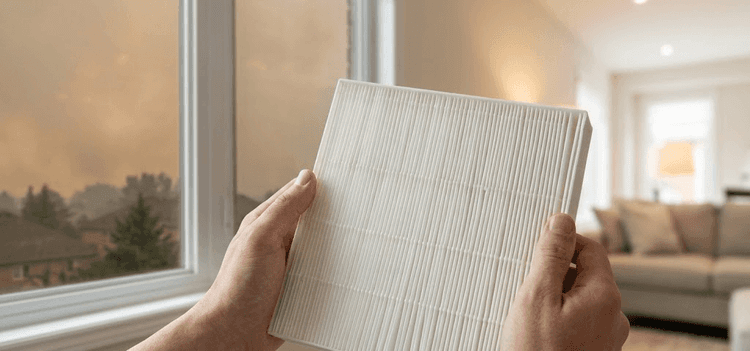
Key Takeaways: As hazardous wildfire smoke blankets Ontario, staying indoors isn't enough to protect your respiratory health. Learn how to shield your family by optimizing your HVAC settings and upgrading to a medical-grade GeneralAire Whole-Home HEPA and UV system to scrub out 99.97% of toxic PM2.5 smoke particles. On Wednesday, July 15, 2026, Environment and Climate Change Canada issued urgent air quality warnings across southern Ontario, including Toronto, Ottawa, and Mississauga. Driven by a massive Ontario Wildfire outbreak in northwestern parts of the province, plumes of thick smoke have drifted over 1,000 kilometers south. By Wednesday morning, Toronto ranked as the most polluted major city in the world, with an AQI exceeding 180. Local officials have activated "orange alerts" as the AQHI Ontario wildfire (Air Quality Health Index) surged into the maximum "very high risk" zone. The smoke is expected to remain well into Thursday with forecasts of clearing gradually by Friday, July 17th, 2026. Staying indoors is the primary safety recommendation. However, outdoor pollution quickly penetrates buildings, meaning your indoor air quality wildfire smoke defenses must be properly managed to prevent health complications. The Health Risks of Wildfire Smoke and Bad Air Quality Wildfire smoke is a complex mix of toxic gases and fine particulate matter. The most critical health threat comes from particles smaller than 2.5 microns, which require specialized wildfire smoke PM2.5 filtration to capture. Because PM2.5 particles are microscopic, they easily bypass your respiratory tract's physical defenses, traveling deep into your lungs and entering your bloodstream. Wildfire Smoke Health Risks in Ontario Mild Symptoms: Eye, nose, and throat irritation, accompanied by headaches and a mild cough. Severe Symptoms: Wheezing, severe coughing, chest pain, and breathing difficulties. High-Risk Groups: Seniors over 65, pregnant individuals, infants, young children, and anyone with pre-existing heart or lung conditions (such as asthma or COPD). Long-Term Impact: Prolonged exposure can trigger cardiovascular events, chronic bronchitis, and severely reduced lung capacity. How to Protect Your Home from Wildfire Smoke Your HVAC system acts as your home's primary shield. Knowing how to configure your ventilation system during a smoke event is critical to keeping toxic air out. | HVAC Component | Recommended Action | Why It Matters | | --- | --- | --- | | Air Conditioning | Should I run my AC during wildfire smoke? Yes, keep it running. | Standard AC units cool and recirculate existing indoor air rather than pulling smoky air inside. | | HVAC Fan Settings | Switch to recirculate HVAC air wildfire settings (Set fan to "ON" rather than "AUTO"). | Constant recirculation forces indoor air through your filtration system continuously, scrubbing out incoming particles. | | HRV / ERV Systems | Turn off or adjust your HRV ERV wildfire settings to "recirculate only." | These units are built to exchange indoor air with fresh outdoor air, which will pull smoke directly into your home. | | Furnace Filter | Upgrade to a high-efficiency MERV 13 filter HVAC model. | Standard filters only catch large dust particles; MERV 13 filters are dense enough to trap fine ash and smoke. | Implementing a Whole-Home HEPA & UV Shield Standard HVAC filters are helpful, but they cannot trap 100% of ultra-fine PM2.5 particles. To fully protect your family, installing a dedicated HEPA filter wildfire smoke system is the recommended solution. A whole-home HEPA filter upgrade works alongside your current furnace and ductwork. Instead of purifying just a single room with a loud portable unit, it continuously cleans the air in every room of your house. The GeneralAire Filtration Solution For medical-grade protection, we recommend integrating the GeneralAire Whole-House HEPA Air Purifier and GeneralAire UV Light system into your home: 99.97% Efficiency: The GeneralAire HEPA filter captures microscopic particles down to 0.3 microns, removing smoke, ash, and common allergens. Odour & Gas Removal: Features a carbon-infused pre-filter that actively neutralizes chemical gases and heavy wildfire smoke smells. Pathogen Neutralization: The accompanying GeneralAire UV Light kills airborne viruses, bacteria, and mold spores as they pass through your HVAC ducts. Constant Mitigation: Keeps your home's air safe, fresh, and breathable during seasonal pollution spikes, heavy pollen seasons, and active wildfire events. Secure Your Indoor Air Quality Today As wildfire seasons become longer and more intense, waiting for the next high risk air quality warning is a hazard to your family's health. Taking proactive steps to fortify your home’s ventilation is the most reliable way to protect your long-term health. Explore your indoor air quality options and request a free quote today. Frequently Asked Questions 1\. Should I run my air conditioner or heat pump during an Ontario wildfire smoke advisory? Yes, absolutely. Running your central air conditioner or heat pump is highly recommended because it allows you to keep all windows and doors closed (preventing outdoor smoke from leaking in) while keeping your home cool. However, you must make sure your thermostat/HVAC system is set to "Recirculate" (or "ON" rather than "AUTO") so it continuously filters the existing indoor air instead of pulling in smoky air from outside. 2\. What filter rating is best for removing wildfire smoke and PM2.5 particles? Standard fiberglass filters cannot capture the microscopic PM2.5 particles found in wildfire smoke. You need a minimum of a MERV 13 pleated filter or HEPA filter to begin trapping smoke particles. For the ultimate level of protection, upgrading to a dedicated whole-home HEPA filtration system is the gold standard, as it is clinically proven to trap 99.97% of airborne particles down to 0.3 microns. 3\. Should I turn off my HRV or ERV (ventilation system) during a smoke event? Yes. Heat Recovery Ventilators (HRVs) and Energy Recovery Ventilators (ERVs) are designed to bring fresh, outdoor air into your home. During a heavy wildfire smoke advisory, they will pull that toxic, smoky air directly into your ductwork. You should temporarily turn off or deactivate your HRV/ERV until the outdoor air quality improves. Related Readings: The 2026 Complete Guide to Home Comfort Systems in Modern Homes Air Conditioner Guide 2026: Keeping Your Cooling Solution Reliable for Home Comfort Heat Pump Guide 2026: A More Practical Heating and Cooling Solution for Home Comfort
 Jun 17, 2026
Rent VS Own a Water Heater: The Ultimate 2026 Guide for Canadian Homeowners
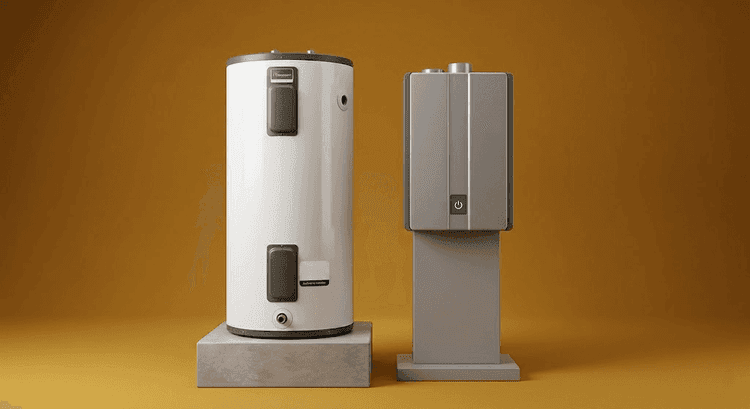
When you move into a new home or notice your hot water getting lukewarm, you face a hidden financial crossroad that can impact your bank account for decades. Unlike almost any other appliance in your home, like your refrigerator or stove, the machine that heats your water comes with a major structural dilemma: should you buy it outright, or sign up for a monthly subscription plan? Evaluating the choice to Rent VS Own a Water Heater is one of the most critical financial decisions you will make regarding your household utilities. While renting has been treated as the effortless, hands-off "default" choice in certain regions for generations, modern economic shifts in 2026 are forcing consumers to look closer at the true math. Let's break down the realities of water heating contracts, the long-term benefits of purchasing your equipment, and how to choose the right system for your property. Trend of Rent and Own Water Heaters in Canada The practice of paying a monthly fee for hot water is unique when looking across the country. In provinces like Alberta and British Columbia, the concept of renting an appliance is practically non-existent; homeowners buy their equipment outright as part of standard home infrastructure. However, in Ontario, a legacy system created by utility monopolies decades ago trained millions of residents to automatically accept monthly rental bills. In 2026, the trend is shifting rapidly toward full ownership. Homeowners are pushing back against open-ended contracts that carry escalating monthly fees, high buyout penalties, and strict exit clauses. Many families are finding that after a decade of payments, they have paid three to four times the actual retail value of a builder-grade tank. As a result, consumer awareness is driving an absolute surge in homeowners breaking free from multi-decade rental cycles and transitioning to standalone home comfort investments. The Benefits of Owning a Water Heater While rental companies promote their "zero upfront cost" and free service calls, purchasing your water heating system outright or utilizing a structured financing plan delivers distinct advantages over the long run: 1\. Significant Lifetime Financial Savings A typical storage tank water heater costs roughly $25 to $35 per month to rent, while premium high-efficiency units or tankless models can range from $60 to over $100 per month. Since a quality water heater typically lasts 12 to 15 years, a rental system can cost you anywhere from $4,500 to over $10,000 over its operational lifespan. Purchasing and installing your own unit generally costs a fraction of that total, meaning the system fully pays for itself within the first five to seven years. 2\. Hassle-Free Home Sales If you plan to sell your house, an active water heater rental contract can easily derail a real estate transaction. Buyers in 2026 are highly cautious about inheriting mandatory, non-negotiable monthly fees. Owning your equipment outright removes any legal liens, simplifies your property listing, and adds legitimate, unencumbered value to your home. 3\. Complete Freedom of Choice When you break free from standard utilities, you are no longer limited to low-efficiency, builder-grade units. You gain the freedom to select advanced, eco-friendly models that align with your exact household size, efficiency goals, and brand preferences. Plus, you can pair your system with a comprehensive heating and cooling solution to maximize your entire home's energy savings. Tank VS Tankless Water Heater Once you choose the path of ownership, your next step is selecting the core mechanics of your system. The debate between traditional storage tanks and on-demand systems comes down to lifestyle and space: Traditional Storage Tank Water Heaters How They Work: These tank water heating systems keep a large volume of water (typically 40 to 60 gallons) constantly heated inside an insulated tank, ready to use at any time. Pros: Lower initial equipment purchase price and simple installation parameters. Cons: They suffer from "standby energy loss" because they continuously burn energy to keep water hot even when you are asleep or at work. Additionally, if your family uses up the storage capacity, you have to wait for the tank to refill and reheat. Tankless (On-Demand) Water Heaters How They Work: These compact, wall-mounted units do not store any water. Instead, when you turn on a hot tap, high-powered gas burners or electric elements instantly flash-heat the water as it flows through the machine. Pros: They offer an endless supply of hot water, save significant basement floor space, and boast up to 96% to 98% efficiency because they only consume energy when a tap is actively open. Cons: Higher initial upfront installation cost, though this is heavily mitigated over time by lower monthly gas bills and a lifespan that is nearly double that of a traditional tank. Upgrading to an energy-efficient tankless water heater is often the smartest choice for large or busy families. Related Articles from Polaron Comfort Water Treatment Solution Guide 2026: Reverse Osmosis & Water Softener The 2026 Complete Guide to Home Comfort Systems in Modern Homes How to Lower Your Energy Bills: Expert HVAC and Water Heater Tips Water Heater Guide 2026: A Reliable Home Solution for Everyday Home Comfort Ready to stop paying endless rental bills and take total control of your home utility costs? Contact the experts at Polaron Comfort today to receive a professional water heating assessment and find the perfect, high-efficiency system for your household! FAQ: Most Asked Questions About Water Heaters 1\. Can I buy out my current water heater rental contract at any time? Yes, you can legally request a buyout quote from your rental provider. The cost is calculated based on the age and model of the unit. Many homeowners find that paying the one-time buyout fee to end the contract immediately saves them thousands of dollars in cumulative fees over the remainder of the unit's lifespan. 2\. If I own my water heater, am I responsible for repairs? Yes, as the owner, maintenance falls under your care. However, new high-quality systems come backed by robust manufacturer warranties that cover key components (like the heat exchanger or tank shell) for up to 10 to 15 years. You can also protect your peace of mind with budget-friendly protection plans without being locked into an escalating rental contract. 3\. How often do water heaters need to be maintained? To maximize your system efficiency and prevent premature failure, a traditional tank should be drained and flushed annually to remove sediment. Tankless systems operating in hard-water regions like Ontario should be professionally descaled every 12 to 24 months to keep the heating elements clear of scale buildup.
 Jun 17, 2026
The Complete Guide to the Oil to Heat Pump Affordability Program (OHPA)
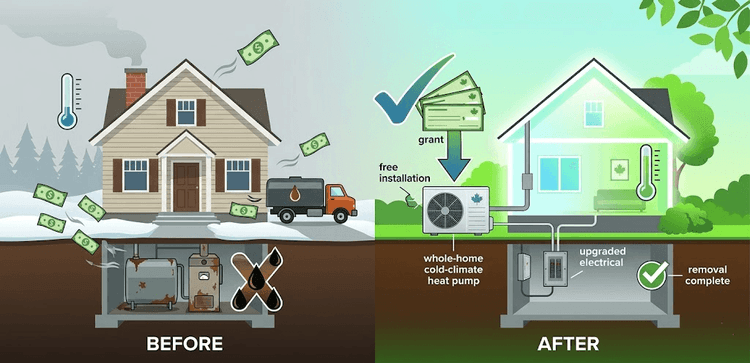
If you are still heating your home with an oil furnace, you are well aware of the headaches it brings. Between volatile fuel delivery prices, the constant worry of an aging oil tank leaking, and the sheer cost of keeping your home warm through a Canadian winter, oil heat has become an expensive relic of the past. Fortunately, the federal government has introduced an aggressive, direct initiative to help families transition away from fossil fuels without taking on massive debt. If your household matches regional median or below-income criteria, the Oil to Heat Pump Affordability Program is designed to eliminate the financial barriers of modernizing your home comfort system. What is the Oil to Heat Pump Affordability Program? The Oil to Heat Pump Affordability Program (commonly known as OHPA) is a targeted federal grant designed explicitly for lower-to-middle-income Canadian homeowners who currently heat their properties with oil. Unlike standard retroactive grants where you must pay thousands out of pocket and wait months for a reimbursement check, the OHPA program provides upfront funding or direct-to-contractor payments so you face little to no out-of-pocket costs. The maximum amount of funding available depends heavily on where your property is located: The Federal Base Grant: Offers up to $15,000 in upfront funding for eligible households in Ontario and Nova Scotia. Nova Scotia Stream: Thanks to matched provincial funding extensions, eligible Nova Scotian homeowners can receive up to $15,000 in total upfront grants, completely covering the installation, plus a specialized $250 bonus payment. Ontario Stream: Delivered in partnership with the Independent Electricity System Operator (IESO), eligible Ontario households can receive free direct installations of a cold-climate system valued up to $25,000 (combining up to $15,000 federal and $10,000 provincial allocations) from the Energy Affordable Program. Crucially, the grant money doesn’t just cover the price of the heating equipment itself. It can also be applied toward the safe removal of your old oil tank, auxiliary electric backup heaters, and any required electrical panel upgrades needed to support the new system. What is a Heat Pump? A heat pump is an advanced, two-way climate control system. Instead of burning a fuel source like oil or gas to create heat, it uses a specialized refrigerant cycle to move existing heat from one place to another. In the winter, a cold-climate heat pump extracts ambient thermal energy from the outdoor air (even in extreme sub-zero temperatures), intensifies it through a compressor, and distributes it indoors as reliable warmth. In the summer, the system reverses direction. It acts exactly like a heavy-duty air conditioner, drawing warm air and indoor humidity out of your home and venting it outside to keep your indoor spaces perfectly crisp. The Trend of Using Heat Pumps in Canada Across the country, the transition to residential electrification has accelerated dramatically. Thousands of Canadian homeowners have already successfully utilized the program, resulting in tens of thousands of metric tons of greenhouse gas reductions. The surge in popularity is driven by a collective shift toward grid-tied energy infrastructure. As provinces continue to modernize their electricity grids, moving away from volatile, foreign-dependent oil markets toward stable, locally regulated electricity is viewed as the definitive path forward for long-term economic security. The Benefits of Using a Heat Pump Switching from a traditional oil furnace to a premium electric system delivers instant improvements across multiple areas of your life: Substantial Monthly Savings: On average, Canadian households that completely transition from oil to an energy-efficient heat pump save over $1,300 per year on their net utility bills. Year-Round Comfort Integration: Oil systems can only provide heat. A heat pump acts as both your winter furnace and your summer cooling solution, eliminating the need to buy or maintain a separate air conditioner. Enhanced Home Safety: Removing an oil tank eliminates the risk of environmental soil contamination or carbon monoxide leaks associated with burning fossil fuels inside your home. High System Efficiency: Because heat pumps move thermal energy rather than burning fuel, they achieve up to 200% to 300% efficiency, making them the most environmentally responsible choice for modern home comfort solutions. Other Heat Pump Rebate Programs in Nova Scotia and Ontario If your household income sits above the median threshold required for the upfront OHPA grant, you can still access substantial alternative provincial funding pools: In Ontario: Homeowners can leverage the Home Renovation Savings (HRS) Heat Pump Rebate, which offers up to $7,500 for non-gas homes and up to $2,000 for gas-heated properties looking to install a flexible hybrid setup. In Nova Scotia: Homeowners can utilize the Efficiency Nova Scotia heat pump rebate pathways, including the Moderate Income Rebate (MIR) and the standard Home Energy Assessment (HEA) streams, which provide up to $5,000 to $9,000 back on centrally ducted installations. Related Articles from Polaron Comfort The 2026 Guide to the Ontario Home Renovation Savings (HRS) Heat Pump Rebate The 2026 Guide to the Efficiency Nova Scotia Heat Pump Rebate Heat Pump vs Furnace: Finding the Right Heating Solution for Your Home Heat Pump Guide 2026: A More Practical Heating and Cooling Solution for Home Comfort Ready to completely eliminate your oil bills and upgrade your home's climate system for free? Contact the local experts at Polaron Comfort today to check your program eligibility and secure your upfront funding assessment! FAQ: Mostly Asked Questions About the OHPA Program 1\. Do I need a home energy audit to apply for the Oil to Heat Pump Affordability Program? Unlike legacy federal programs, a pre-retrofit home energy evaluation is typically not required for standalone OHPA applications, drastically speeding up your approval timeline. 2\. What documents are required to prove my eligibility? You will need to provide proof of homeownership, proof of household income (such as your latest Notice of Assessment), and official fuel delivery records showing you purchased at least 500 liters of heating oil within the past 12 months. 3\. Can I install a hybrid system (heat pump paired with an oil furnace) under this program? No. The core objective of the OHPA program is full electrification. Hybrid configurations that leave an oil furnace active as a backup are completely ineligible for this specific funding stream.


.70e3bcd1.svg)
.8cbc05bd.svg)
.29c01fed.svg)
.6c51ffe3.svg)